
Preaching Dangerously

“And all [in the synagogue] were speaking well of [Jesus], and wondering at the gracious words which were falling from his lips” (Lk 4.22a-b).

“And all in the synagogue were filled with rage as they heard these things; and they got up and drove Him out of the city, and led Him to the brow of the hill on which their city had been built, in order to throw Him down the cliff” (Lk 4.28-29).

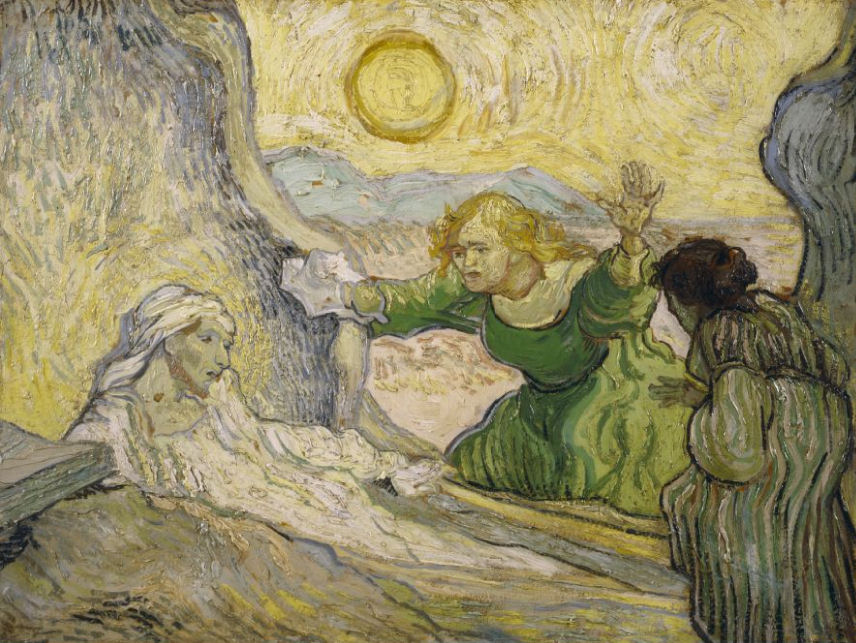
Jesus’s public ministry began with a whirlwind itinerary of preaching the arrival of God’s kingdom.  He eventually toured back to his hometown synagogue where his Sabbath text was Isaiah 61.1-2 (cf. Lk 4.18-19).  His preaching thrilled the hometown crowd.  Joseph’s son has made it big and would put Nazareth on the map.

Six verses (four Greek sentences) later, Nazareth wanted nothing to do with Jesus.  In fact, we find them responding Satanically to Jesus.  In Lk 4.9, Satan ushered a beleaguered, haggard, famished Jesus to the tippy top of the temple.  It was a sonship test.  God promised that his Son would always be protected by the angelic cohort.  If Jesus was indeed God’s son then he could hurl himself off the temple mount and watch angels swoop in to his rescue.  Jesus’s sonship, however, would not be proven by silly, superstitious games but by resurrection from the dead.  Satan would have to wait “until an opportune time” (v13).

Jesus’s encore sermon in Lk 4.23-27 was not received as well as his first one.  What do we find the townsfolk of Nazareth doing to their visiting preacher?  They led him to the top of their hill in order to chunk him down the cliff to his death.  At least Satan gave Jesus the choice of doing it himself!  These hard-hearted Nazarenes wanted to lynch Jesus. Unbeknownst to them, they were in league with Satan just as Jesus spent Lk 4.23-27 implying.

Like any upstanding Jew in Jesus’s day, the Nazarenes assumed they were part of God’s kingdom for external reasons.  They had Torah, temple/synagogue, sacrifices, Jerusalem.  They awaited their Messiah who would finally put the rest of the world to rights and restore Israel’s fortunes.  Jesus had a different agenda.  Just as Elijah bypassed all the Israelites to bless a Sidonian (Gentile) widow and just as Elisha snubbed all the Israelites to cleanse the Syrian Naaman, Jesus brought God’s kingdom to the nations.

God’s kingdom would not be recognized according to borders, walls, temples, armies or kings.  It would be recognized by repentance and faith in Jesus.  Messiah would not change the world around them, but change the world inside them.  Jewishness was irrelevant now that the new creation had dawned in Jesus.  So, whereas the Nazarenes thought Jesus to be making much of them, he was actually making much of himself despite them.  And those were fighting words.

How we like preachers who make much of us!  We love those who praise our external religion.  But if ever a word pierces through the veneer of our superficial religiosity, we turn quickly from friend to enemy.  Any suggestion that we are unfit for God’s kingdom because of our sin opens the floodgate of rage.  With a religious résumé like mine, how dare anyone question my Christianity!  Where is the nearest hill on which our city has been built?

How well do you receive God’s word?  Do you consistently consider a threat against you?  Do you regularly feel condemned  by it and therefore enraged at it?  Do you direct your anger toward the preacher rather than the message?  Is your spiritual disposition fickle like the Nazarenes, who are happy one minute and livid the next?  Can you not receive difficult, confrontational, pride-killing messages from God?  Do you react impulsively as though God (or the preacher) is picking on you, or do you seriously meditate on God’s word as a means of grace for salvation and sanctification?

For those of us who are preachers, we should take great comfort from Jesus’s ministry.  In fact, Jesus ended his ministry the same way he began.  He was welcomed into Jerusalem on Monday with cries of “Hosanna!”.  By Thursday, those same folks cried, “Crucify Him!”.  God’s word is indeed a two-edged sword which wounds as well as and as quickly as it heals (Heb 4.12).

If you are faithful minister of God’s word, the very people who praise you today might very well turn on you tomorrow.  Last week’s “great” sermon may be this week’s death wish.  This week’s “gracious words” may not last long.  Folks may speak well of you this week but incite a riot the next.  We must take neither excessive praise or excessive criticism to heart, but take all evaluation to Christ who alone is faithful and qualified to judge our cross-bearing (1 Cor 4.3-4).

We must remain faithful and impartial.  Our only partiality is toward Christ.  It is with him we must do.  And though we may be thrown off the cliff, God’s angelic cohort will indeed welcome God’s servants in the joy of Christ himself.  Let us not be tempted by food, glory or vindication  but rather rejoice to be both loved and hated for the sake of Christ (1 Cor 10.18).


01

12 2011

Cross Your T

What a difference one letter makes!  Repentance is one “t” away from wholesale gospel distortion.  Without its “t” repentance is re-penance, which is often what we consider repentance to be.  However, repentance is not repeated penance,  but one’s change of mind toward sin and its empty promise of life eternal.

What we often demand from others in the name of repentance is really acts of penance that prove they’ve overcome their sin.  We want proof they’ll not offend us again.  We want sufficient evidence they’ve paid for their sin(s) against us.  We care less about Christ being enjoyed by the offender than we being made “whole” by their so-called repentance.  Repentance means repayment . . . re-penance.

While a lifestyle of repentance is definitely part-and-parcel of the Christian life, we can weight it so heavily we focus more on sin than on Christ.  We gauge spiritual maturity by how much sin one is repenting from.  This is not to say there are no particular sins from which we should be repenting (for example, see Eph 4.29-31; Col 3.9), but when the yoke of repentance becomes heavier than the yoke of Christ (Mt 11.28-30)we’ve tipped the scales of grace.

Our men’s discipleship group is reading Charles Spurgeon’s All of Grace, in which the “prince of preachers” wrote:

Remember that the man who truly repents is never satisfied with his own repentance.  We can no more repent perfectly than we can live perfectly.  However pure our tears, there will always be some dirt in them; there will be something to be repented of even in our best repentance.  But listen!  To repent is to change your mind about sin and Christ and all the great things of God.  There is sorrow implied in this, but the main point is the turning from the heart from sin to Christ.  If there is this turning, you have the essence of of true repentance even though no alarm and no despair should ever have cast their shadow on your mind (All of Grace, Whitaker House, 1983: 74).

Spurgeon later comments:

Repentance will not make you see Christ, but to see Christ will give you repentance.  You may not make a Christ out of your repentance, but you must look for repentance to Christ . . . Look away, then, from the effect to the cause, from your own repenting to the Lord Jesus, who is exalted on high to give repentance (Ibid., 76).

“You may not make a Christ out of your repentance.”  And yet that precisely what we do when measuring one’s Christianity by how much sin one is repenting of.  The truly godly, the true Christian, is one always going about weighed down by sin and the demand for repentance.  Rather than applying the balm of God’s grace in Christ to wounds, we salt them with the sting of so-called repentance testing how strong one is to endure God’s discipline as God’s child.

There is a godly sorrow which marks God’s children (2 Cor 7.8-10).  But that sorrow leads to a repentance without regret (v10).  As necessary as godly sorrow is, we do not live in it.  It is a means to end.  It is one vehicle among many by which we’re led to greater faith in and enjoyment of Christ.  We can so enforce repentance on everyone such that we care more about how bad they feel about their sin than how much they love and apply Christ.  We simply want others (namely, those who’ve offended us) to feel as bad as possible about offending us rather than enjoying Christ’s work to forgive them.  Like the older brother (dare we say, “progidal” himself) in Luke 15.11-32, we don’t like grace lavished on sinners.  We want sorrow, and lots of it.

Let’s be honest.  We will never repent from every single sin we’ve ever committed.  One reason for that is because we don’t know every sin we’ve committed.  We’ve assuredly committed more sins we don’t know about than those we do know about!  So repentance cannot be the lifelong making-up-for every sin we’ve ever committed.  Repentance is the lifelong change-of-mind toward our sin.  We hate it and by God’s grace will never consider it a means of God’s blessing or eternal life.  Once converted, we’ll never think of the sins we commit affectionately or lovingly.   We commit it again and again (1 Jn 1.10), but we do not return to it as a means of salvation or of quenching our soul’s thirst. We will never abandon the narrow road for the wide road.  Our sin will always be heinous to us and Christ will always be the One to whom we run for comfort.  We will always return to Christ.

There will be victory over particular sins and others will nag us to death.  In the end, our repentance is always tethered to our faith in Jesus Christ alone for righteousness. Sure, I commit sins.  And how do I know I’m repenting of those sins?  I refuse to return to the “city of destruction” but press on toward the Celestial City.  I take my sins to the cross where they’re forgiven and ultimately defeated.  Christ will not let me “sin unto death” (1 Jn 5.16-18) but will see to it Satan’s plan to squash my saving faith fails again and again and again.

Laying aside every encumbrance and entangling sin (Heb 12.1) is not stopping the race to untangle sin’s web.  It is to fix our eyes on Jesus and our entangling sin will be loosened by the power of the gospel (Heb 12.2).  Too often we demand that those in sin get themselves untangled before they continue the race.  They must prove again and again that they are indeed qualified contestants.  But its continuing the race, with eyes fixed on Christ, that is the essence of repentance.

How do I know I’m repenting from sin?  It’s not how much I mope around about it or how many hoops I jump through to restore fellowship.  The proof of repentance is my continuing the fight.  I get up from the mat and keep swinging.  I keep seeing my sin in the shadow of the cross.  And I refuse to leave my Jesus who bought me.  The fruits of repentance will blossom from the soil fertilized by the gospel, not from superficially imposed acts of penance.

We don’t live the Christian life together by trying to help one another become perfect.  We don’t go about making sure everyone is making sufficient restitution for their sin (re-penance).  We live such that we help one another pursue the Perfect One.  When someone stumbles we don’t kick them to the curb until they can get untangled.  We lift their heads to Christ and keep them churning with the power of the gospel.

Tags:

28

11 2011

DeYoung on Da’ Young

The Gospel Coalition published yet another great post from the insightful and provocative Kevin DeYoung.  Entitled “Dude, Where’s Your Bride?”, the article addresses what DeYoung considers a paucity of marriagable Christian men.  This trend, as DeYoung cites, is part of the larger trend among all men.  There is simply a generation of men without “substance” and “plans.”    In typical DeYoung fashion, he provides helpful correctives for women-seeking-men and churches suffering anemic Christian manhood.

And by “manhood,” neither DeYoung nor I mean the Bible-thumping, chin-chiseled, cliff-climbing, bungee-jumping, Sahara-trekking, canyon-hiking, snake-choking  sort. Rather, we mean “manhood” in the simple sense of men with ambition and vocation.  Men with conviction and vocabularies broader than “like,” “you know,” and “LOL.”  Men with theological sense about them and biblical maturity.  Men with stability and decisive.  Men with emotional depth and thoughtful breadth.  Men who live real lives among real people, not virtual lives among avatars.

What DeYoung doesn’t discuss, but undoubtedly can and elsewhere does, are the reasons why we suffer from anemic Christian manhood.  And certainly those reasons are complex, societal, and categorical.  As part of these complex reasons I might offer one reason why the church lacks eligible bachelors: the modern notion of “youth ministry.”  What follows is a generalization and summary of typical youth ministry experiences.  I realize not all churches, youth ministries and/or youth pastors are just alike.

I’m no youth ministry expert or authority on church history.  But, we should at least agree the church’s ministry to youth has evolved from historic family-centered, church-involved, theologically-rich instruction to family-averse, church-averse, experiential religion.  In fact, we might argue whether or not Scripture endorses or promotes our modern idea of “youth.” Generally speaking, we consider childhood to end at 12-13 years old and adulthood to begin somewhere between 18-21 years old.  In between are those awkward teenage years where you’re neither a child nor adult, but some unpredictable, hybrid creature.  You’re too old to be in “children’s church”  but much too young to handle “big church.” Besides, your parents need a  break from you so they can “worship,” too.   So, we steward you through those teenage years in a cocoon filled with pizza, “praise and worship,” and pie-in-the-face props.  Hopefully, the day will come when you get too big for the youth group and tear your way out of the cocoon into a biblically-astute, relationally-mature adult.

Now we’ve inherited a generation raised under such a philosophy, which as contributed the paucity of mature-minded Christian men.

Biblically, we find the general trajectory of a boy’s life to be childhood and then manhood.  There are certainly varying degrees of manhood and expectations therein.  But the expectation is one is either a child or else formally becoming a man.  There is no “Well, he’s just a teenager”  category, where the expectations of manhood are suspended or relaxed because he has pimples.  We’d surprised at how many of our biblical heroes came into their “own” while teenagers (David, Daniel, Mary, etc).

God’s people raise their boys into Christian manhood.  After all, subject to God’s providence, our children will be adults five times longer than they were kids.   We don’t entertain them to death with silly games.  We instill in them gospel vocabulary as surely as we do English vocabulary. We confront them early and often with the gospel and its demands.  Like Jesus at twelve, they should have astute questions about the things of God.

I’m not suggesting we rob our boys of all that goes along with boyhood.  The Cowboys should always beat the Steelers in the backyard.  There need to be some scars on chins, elbows and knees from riding too fast on a bike.  There are dragons to slay and baseballs to lose in the neighbor’s yard.

But at the end of day, when scrapes are kissed and fingernails cleaned, our boys are becoming men.  And they’re to be guided toward ambition and vocation.  They’re to learn, respond to and apply the language of the gospel.  They’re to learn the rhythm of church life and a Christianity that is “one anothered,” not whipped cream smothered.  After wrestling Dad for the world title on Saturday, our boys should imitate Dad in worship on Sunday.

As we raise our boys into men, our gals will find plenty of brothers worthy of their devotion and submission.  God forbid Kevin DeYoung’s grandson write a similar article forty years from now.